

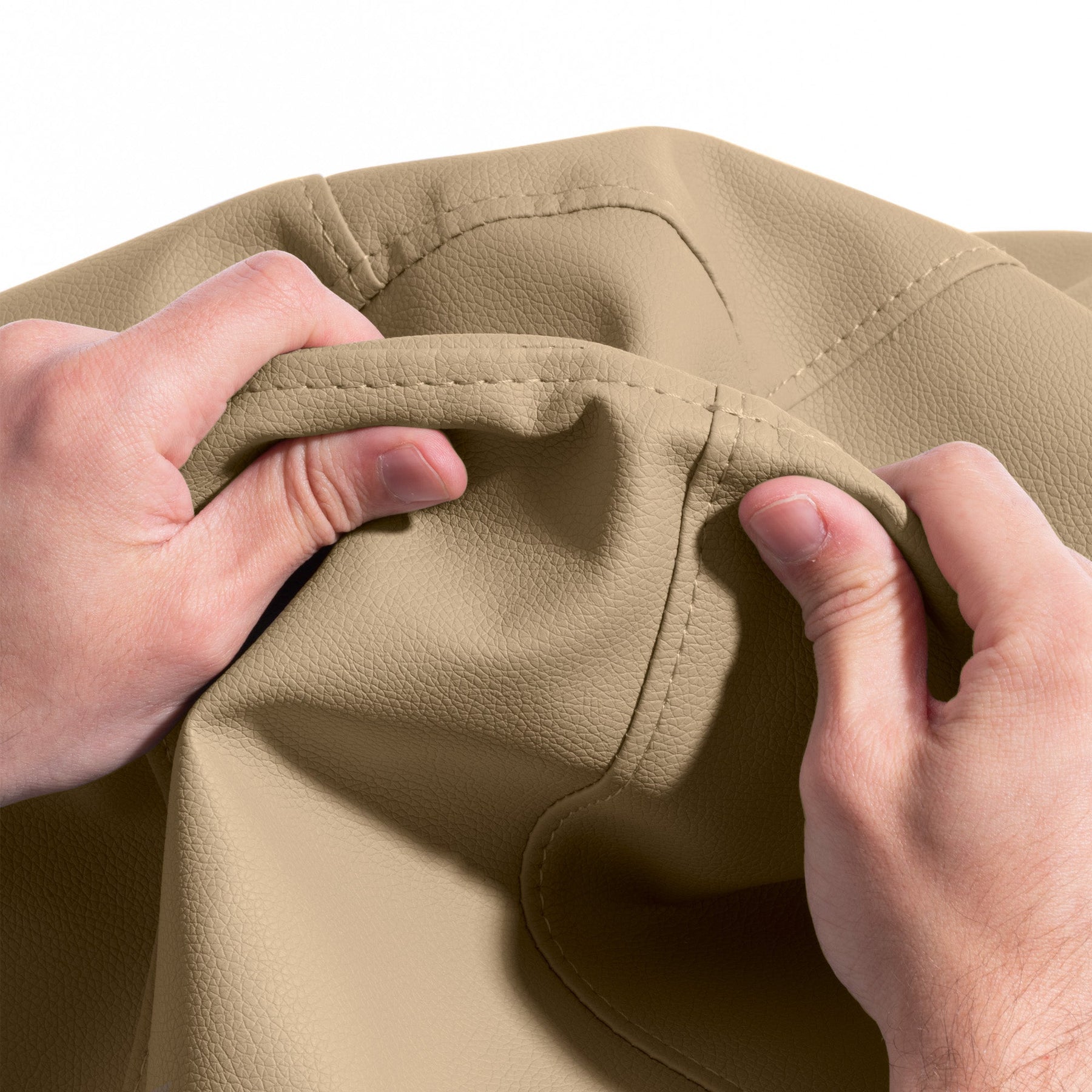
Do you have a sofa or ottoman made of eco-friendly faux leather? It's been a popular material for decades, versatile and sustainable. Because of its benefits, faux leather is widely used for furniture, accessories, and clothing; however, it requires special care to keep it looking its best . Let's look at how to properly clean faux leather, prevent damage, and what remedies to use in the event of cracking.
First, we need to understand its characteristics. Faux leather, also known as imitation leather, is a synthetic material that resembles natural leather and hide. It can be made from a fabric impregnated with polyurethane resins, or it can be a completely synthetic material, without the fabric backing. It has smooth or rough finishes, depending on the manufacturing process, and in our version for Avalon products, it is easy to clean, water-repellent, fire-retardant, and wear-resistant.
Despite its many advantages, eco-leather requires essential maintenance to last a long time (just as much as real leather if you know how).
To keep faux leather in top condition, it's important to clean it regularly with non-aggressive products. This special care can ensure the longevity of your faux leather pouf, sofa, or armchair.
What do you need? It doesn't take much!
A soft cloth for washing
Waterfall
Neutral soap
A dry cloth for drying
Cleaning steps
Remove dust. Using a soft cloth, gently wipe away dust from the surface of the faux leather.
Prepare the cleaning solution. Mix warm water and a small amount of neutral soap in a bowl.
Clean thoroughly. Lightly dampen the cloth in the solution and wring it out well—it should be soft and damp. Wipe the cloth over the surface of the faux leather, without applying too much pressure.
Dry. Use a soft, dry cloth to remove any residual moisture.
The material's structure can break and reveal cracks. Over time, faux leather tends to peel or crack, due to degradation or exposure to sunlight, chemicals, etc. What to do? Act immediately. The cracks can spread, compromising the appearance and durability of the faux leather. Here are some remedies to treat and prevent the problem.
Faux leather, just like real leather, must be cared for in a “defensive” way.
Avoid direct exposure to the sun
If a faux leather product is exposed to prolonged sunlight, it can peel and crack. This is caused by UV rays, which dry out and damage the faux leather. The same can happen if it's exposed to heat sources such as radiators and fireplaces.
Keep hydrated
Use products specifically designed for faux leather, such as balms and creams, that help keep the material soft and supple—they can nourish and restore its elasticity. Remember that harsh cleaning products are harmful, damaging the material and causing it to crack.
Strengthen with a protective spray
To protect your faux leather from scratches and peeling, you can apply a specific faux leather spray. This will add a protective layer to the material, preventing future damage. Some textured products for faux leather often combine cleaning with surface protection.
Going into specifics, let's see how to treat and repair eco-leather when necessary.
Buy a faux leather repair kit
For your first DIY, you'll need sandpaper for the damaged area, detergent, a patch (choose the appropriate color), and adhesive. Be careful not to damage the intact skin around the tear.
Get a professional repair done
If the cracks are severe, you may need to contact a leather professional for repair or replacement.
Remember that prevention is the key to avoiding damage and cracking, and ensuring this material lasts for years. Follow these tips to enjoy the beauty and practicality of faux leather.
Avoid harsh chemicals. Substances such as alcohol, solvents, or abrasive cleaners can permanently damage synthetic leather.
Test cleaners on a small area. Before applying any product (cleaning or protective) to the entire surface, test it on a small, hidden area.
Keep faux leather moisturized. It's similar to real leather in this respect: faux leather benefits from regular moisturizing treatments, which keep it supple.
Use soft cloths: When cleaning or treating your faux leather, be sure not to use rough cloths or brushes; they can scratch and damage the surface, causing peeling.
Repair the damage immediately: to avoid making the situation worse, carefully remove the flakes, seal the crack to prevent it from spreading, and decide whether to have the faux leather repaired.
Customize: Remember, it's important to consider the type of faux leather your products are made of; care methods may vary depending on the material's composition and finish.
When you purchase our Avalon faux leather cushions and poufs , you can be sure of a high-quality material . It will be an excellent choice for those looking for a sustainable alternative to leather that is easy to maintain.
With proper care, your faux leather sofas, ottomans, or other furnishings can last a long time while maintaining their original appearance!

