

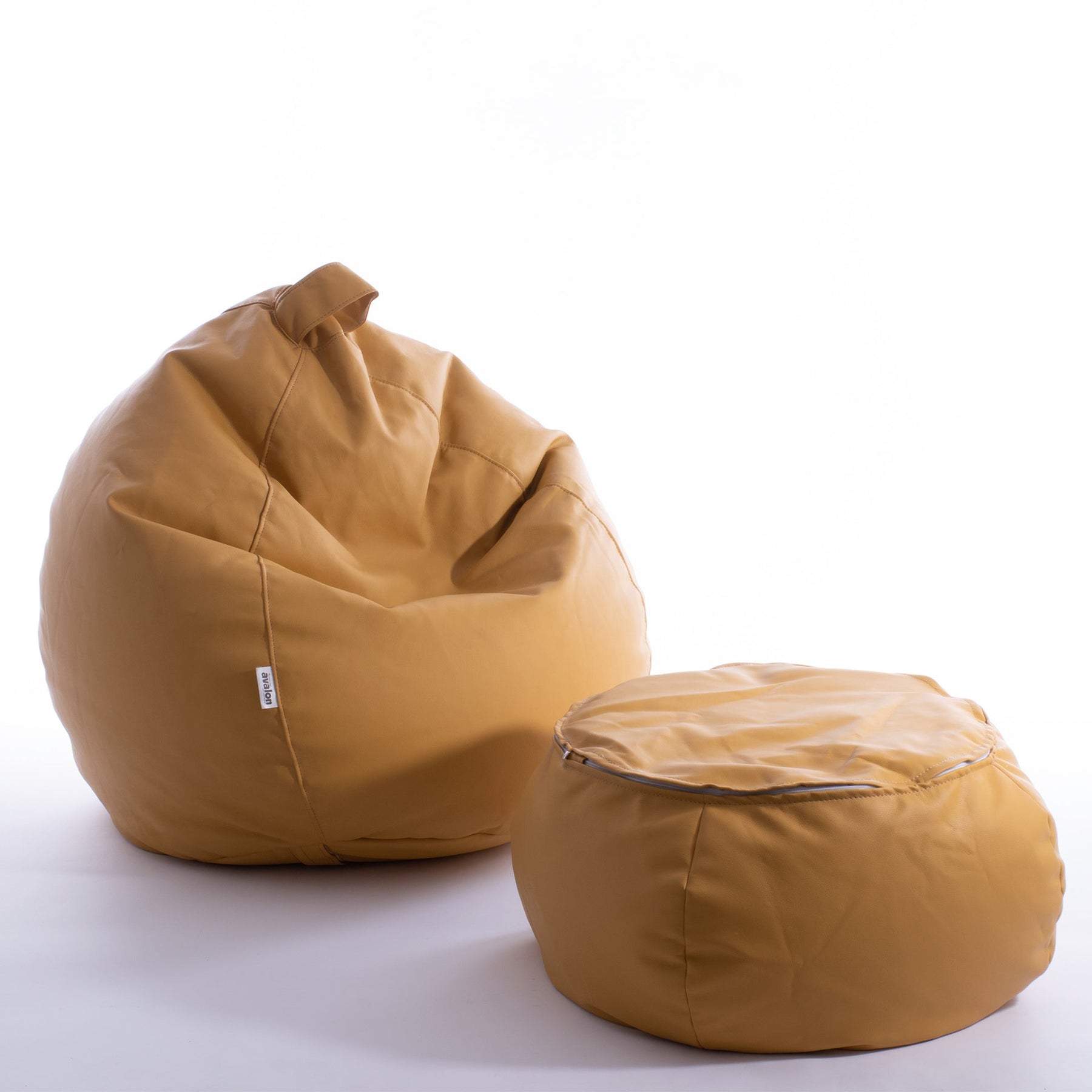
Leather armchairs, sofas, and ottomans immediately stand out in any decor due to their elegance and the style they bring. However, for several years now, this material has been replaced by certain types of faux leather, which have become an alternative to natural leather for those who prefer not to use it.
Whether for ecological or cost reasons, similar materials can be introduced into furnishings, including vinyl, imitation leather, and eco-leather.
At first glance, all these replacements seem similar to the original and to each other, but there are differences...
The quality of the leather and its characteristics can be imitated or reproduced by varying the types of materials used.
We usually talk about eco-leather, but we mean imitation leather. This is the first point to clarify.
Eco-friendly leather, or eco-leather, is animal-derived leather treated with a special tanning process to reduce its environmental impact. This creates a product with the characteristics of real leather, but it's not actually leather.
Much more often, when we say "eco-leather," we mean "synthetic leather," also known as faux leather or synthetic leather. This material resembles real leather in appearance but is created using a special process—developed and produced by the industry much later than other imitation leathers. This process ensures that it appears as close to natural as possible, while avoiding the disadvantages of other older materials and meeting environmental standards.
This so-called eco-leather for seating and furniture has been highly praised by experts for its qualities, which mimic natural leather and even surpass it in some respects. Its external characteristics can be seen in many creations—for example, in our eco-leather poufs .
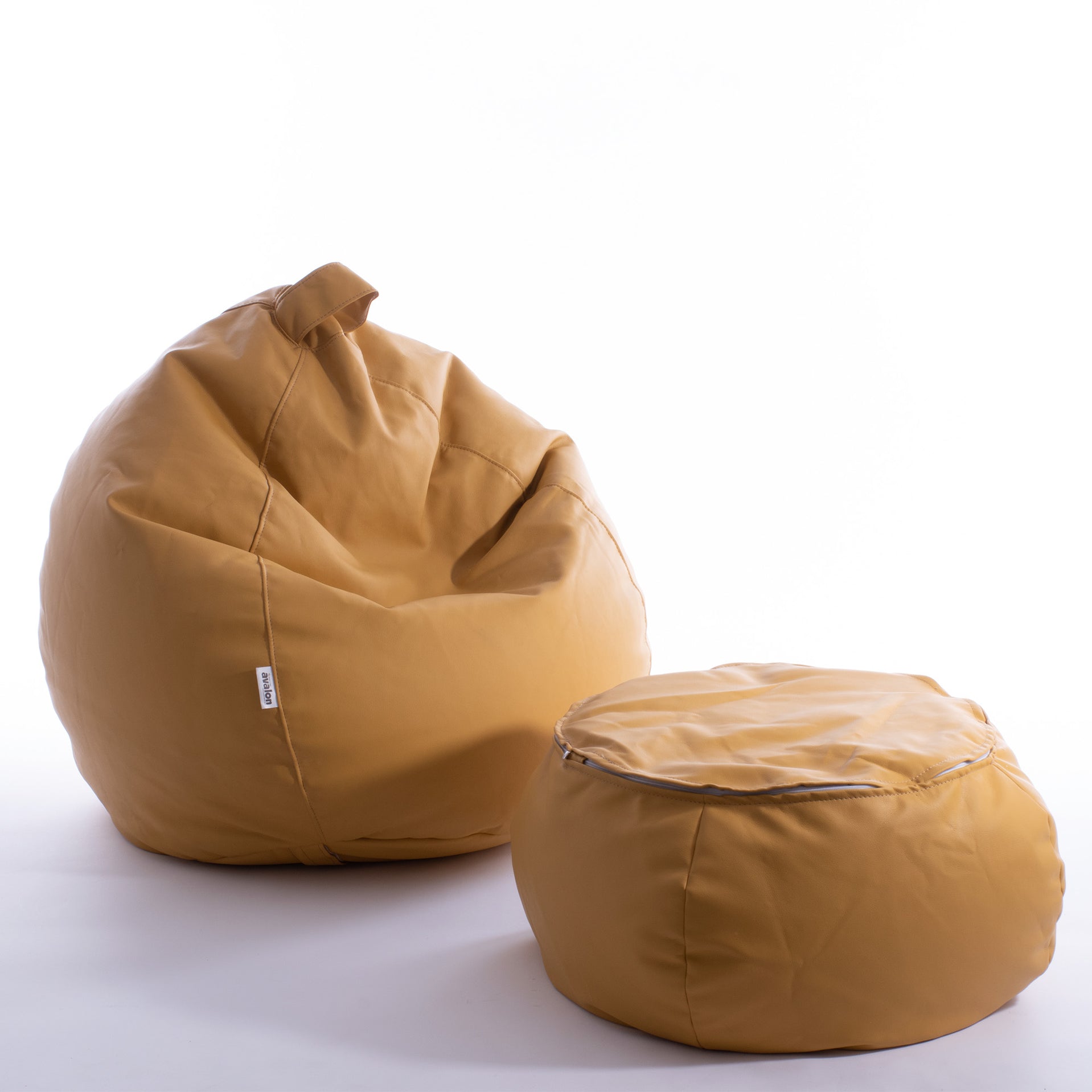
Faux leather is often made with a base made of fabric (cotton) or polyester. This base is then coated with a special polyurethane (PU) coating, which has a porous structure but is free of harmful plastics. This allows the faux leather to retain the typical wrinkle of leather. Faux leather can also be made with high-quality cellulose-based raw materials.
For the sake of completeness, we'd like to mention vinyl leather as an alternative: made from vinyl resins, it simulates the natural raw material. Other new developments include sustainable materials derived from recycled and reprocessed food waste: apple peels and cores, pineapple leaves, mango fruit, wood, wheat, mushroom roots, and more.
Faux leather is a suitable replacement for leather and hide, without having to use animal skin.
It can resist wear, abrasion and creases.
It is breathable, but does not allow the passage of moisture, mites and dust.
It is water resistant and washable.
It is an environmentally friendly material.
It withstands cold temperatures and direct sunlight without fading.
It does not lose elasticity.
It does not cause allergies or irritations, does not emit chemical odors or harmful substances.
It is light and does not weigh down the covering.
It is priced much lower than natural leather or similar materials.
Its durability is also evident in its use in seating, such as the faux leather pouf bed , a perfect option for living rooms or bedrooms, always ready to welcome guests. Useful as a pouf for relaxing or as a bed for sleeping, this armchair-bed is also elegant thanks to its faux leather.
Obviously, compared to real leather there are differences to consider:
It's not a 100% natural material like animal skin. The porous surface of faux leather can absorb dirt more easily and requires frequent cleaning. Additionally, bedding or sofa covers slide easily off the surface, so they need to be positioned appropriately.
We know that it is resistant to abrasion and creases without breaking, but it still requires some care.
As for hygiene, eco-leather is very easy to clean, as it is a material that can be washed with just soap and water.
We recommend using a soft sponge dipped in a mixture of warm water and neutral soap, rubbing gently over the surface. Rinse with a cloth or sponge dipped in clean water, and dry with a soft, dry cloth. Alternatively, you can use a terry cloth.
In addition to routine cleaning, if faux leather gets stained, you can clean it in the same way, but quickly, to prevent the stain from "setting" on the surface. Be careful with pen or marker stains, which are not easy to remove immediately. In this case, and for stubborn stains, commercial stain removers for faux leather are available. You could also use a napkin soaked in ammonia, then rinse with a damp cloth. It's always worth testing in a hidden area first, if the result doesn't cause any damage.
If you want to improve the moisture resistance of your faux leather upholstery, you can apply water-repellent agents for leather garments once a year.
Generally speaking, dirt can be removed easily without requiring special and expensive products or dry cleaning!

